

Building in Public Why Talking to Users Early is the Ultimate Moat
Executive SynthesisIt is incredibly tempting to hide behind your code editor until your product is perfect. But radical early communication builds genuine trust and prevents you from building the wrong features.
- Why do founders avoid talking to users? Founders often fear negative feedback or believe their product must be absolutely perfect before showing it to the public causing them to hide behind their code.
- How does transparency help a finance startup? The financial industry is filled with scams and hidden fees so building in public and owning your mistakes proves to users that your platform operates with genuine integrity.
- Should I respond to angry users? Yes absolutely. Responding personally to an angry user and fixing their problem quickly is the fastest way to turn a harsh critic into a lifelong brand evangelist.
The Trap of the Code Cave
When you are building a complex financial technology platform your natural instinct is to hide. Founders often retreat into what is known as the code cave. You convince yourself that if you just spend one more month polishing the database architecture or refining the artificial intelligence models the users will magically arrive and understand exactly what you built.
This is the most dangerous trap in the startup ecosystem. Hiding behind your code isolates you from the actual human beings you are trying to serve. If you do not communicate with your audience until launch day you risk spending thousands of hours building a brilliant solution for a problem that nobody actually cares about.
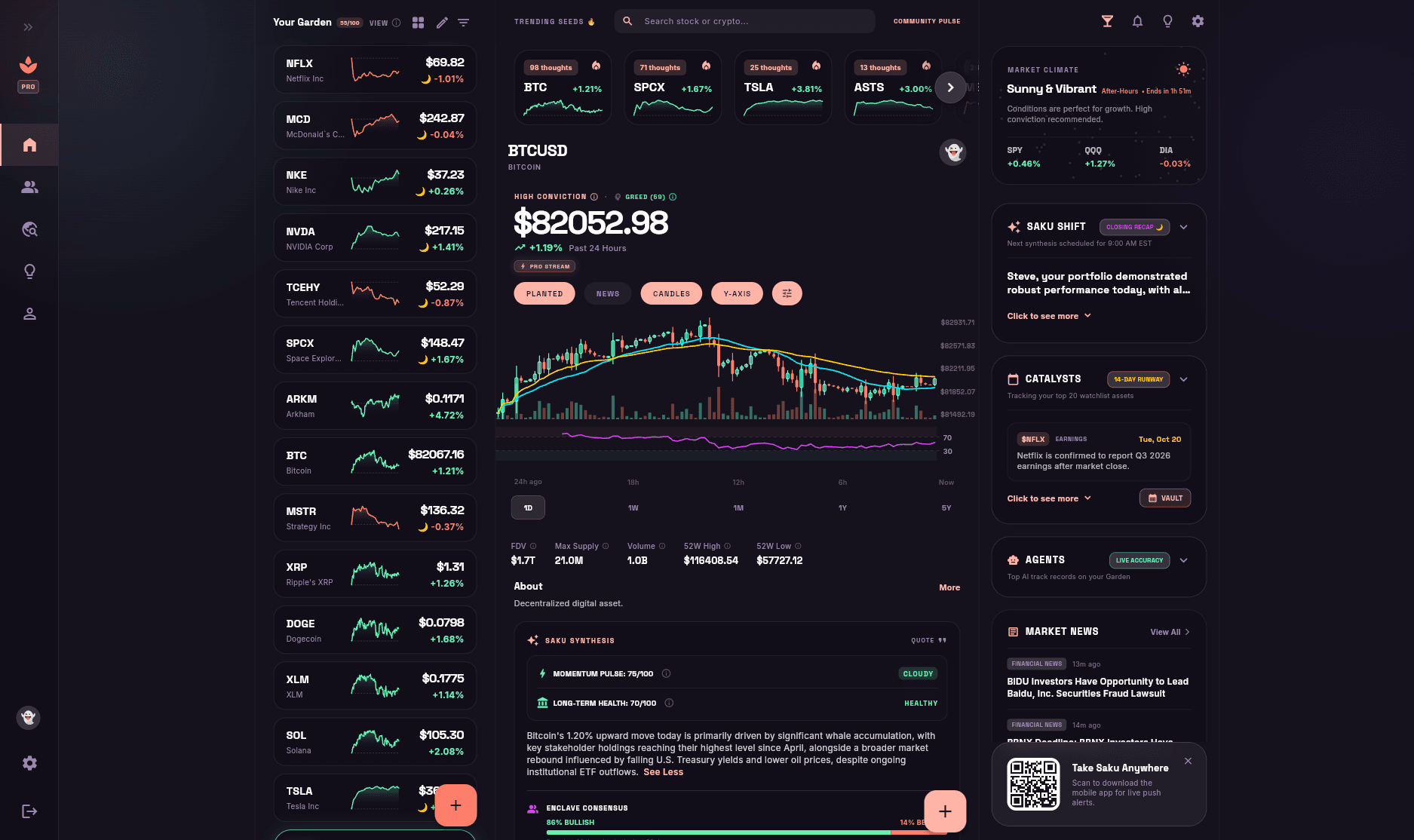
See Live Dark Pool Flow & AI SEC Synthesis in Action
Don't just read about institutional order flow—track it live on your favorite stock or crypto ticker right now.
Radical Transparency as a Growth Hack
The modern retail investor has been burned repeatedly by massive faceless corporations and fake social media gurus. They are inherently skeptical of new financial tools. The absolute fastest way to break through that skepticism is through radical transparency.
When you communicate early and often you humanize your brand. Showing your early adopters the messy reality of building a startup including the bugs the server crashes and the delayed feature rollouts builds an impenetrable layer of trust. They stop seeing you as a greedy corporate entity and start seeing you as a passionate founder fighting in their corner.
| Market Intelligence Layer | Legacy Retail Apps | Saku AI Terminal (Free) |
|---|---|---|
| Support & Resistance Zones | Subjective retail trendlines | Mechanical Call/Put Walls, SMA/EMA & 1–100 Momentum Pulse |
| SEC Filings & Breaking News | Delayed headlines & raw 80-page PDFs | Instant event-driven RAG AI synthesis of Form 4, 8-K & 10-Q |
| 24/7 Market Surveillance | Manual price alerts only | 3 House Quants + Personal AI Companion at Workstation #4 |
| Prediction Accountability | Unverified social posts (deleted losses) | 5-Minute Write-Locked Oracle Ledger & Precision Grading |
Creating Evangelists Not Just Users
If you engage directly with a user who sends you a frustrated email about a broken feature you have a unique opportunity. When you reply personally explain exactly why the bug happened and push a fix live the next day you completely change their psychological relationship with your product.
That frustrated user transforms into your loudest evangelist. They will actively defend your platform on Reddit and Twitter because they feel personally invested in your success. You cannot buy that level of loyalty with marketing dollars you can only earn it through relentless early communication.
Track live dark pool flow & hatch your Personal AI Quant at Desk #4.
Why do founders avoid talking to users?
Founders often fear negative feedback or believe their product must be absolutely perfect before showing it to the public causing them to hide behind their code.
How does transparency help a finance startup?
The financial industry is filled with scams and hidden fees so building in public and owning your mistakes proves to users that your platform operates with genuine integrity.
Should I respond to angry users?
Yes absolutely. Responding personally to an angry user and fixing their problem quickly is the fastest way to turn a harsh critic into a lifelong brand evangelist.
Related Institutional Research
View All Research →Swallow Your Ego Why Brutal UI Feedback Saves Startups
You spent months designing the perfect interface but your early adopters still cannot find the primary buttons. Here is why you must swallow your ego and fix user experience friction immediately.
What to Invest in First Finding Conviction in the Brands You Love
Staring at thousands of ticker symbols is incredibly intimidating for a beginner. Discover why investing in the products you use every single day is the absolute best way to build long term conviction and survive market volatility.
The Macro Convergence Why Crypto and Stocks Must Be Tracked Together
Retail traders often treat digital assets and traditional equities as completely separate worlds. Discover why institutional money treats them as highly connected risk assets and why your radar must include both.
The Macro Watchlist How Saku Synthesis Reveals the True Drivers of the Market
Discover how Saku transforms a simple watchlist into a powerful macroeconomic filter. Learn how our real time synthesis engine reveals the true forces driving global assets like the upcoming Clarity Act.
Ad Free Stock Watchlists and the Death of Commercial Market Noise
Discover why legacy financial platforms compromise quality for ad revenue and how Saku delivers an ad free stock watchlist designed for pure market intelligence.
The Great Convergence Why Crypto and Stocks Can No Longer Be Separated
Retail investors still treat cryptocurrency and traditional equities as completely different worlds but institutional money treats them as highly correlated risk assets. Discover why you need a unified radar and how the crypto clarity act changes everything.

Steven White, MBA
Formerly FINRA & IIROC LicensedFounder & Architect, Saku Financial Inc. • 18-Year TD Bank Group Veteran
Steven spent 18 years at TD Bank Group architecting enterprise product operations, strategy, and financial market technology, and previously held both FINRA and IIROC regulatory licenses. He built Saku to level the playing field—giving self-directed retail investors the same institutional-grade RAG AI synthesis, dark pool order flow, autonomous quant agents, and verified prediction ledgers used by the smart money.
Put Institutional Intelligence to Work.
Track live dark pool prints, read instant RAG AI SEC filing syntheses, and hatch your own personal AI quant companion inside the Saku Sanctuary.